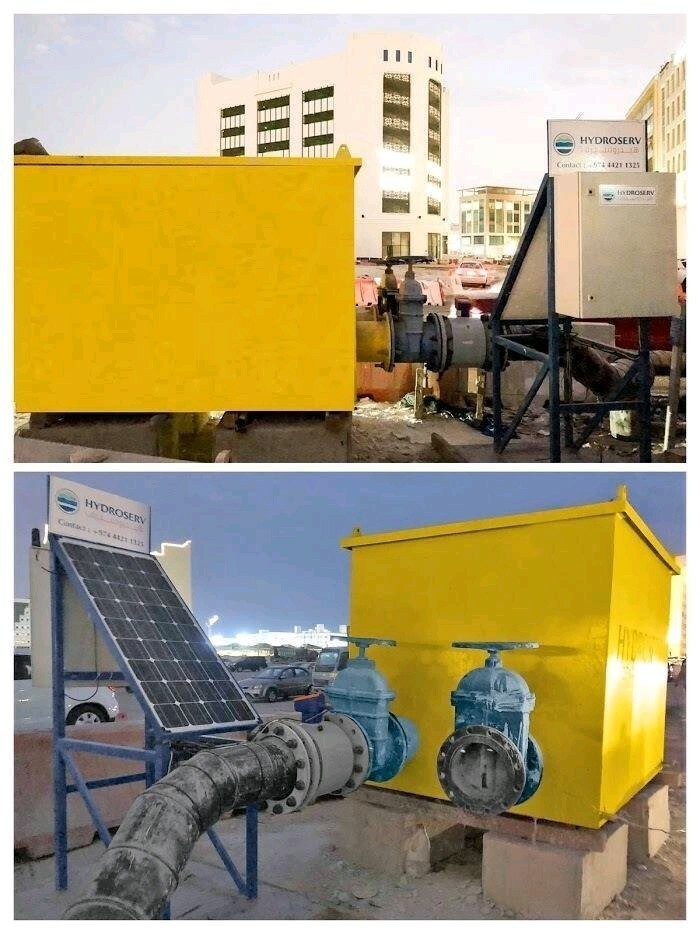
Dewatering Measurement
ASHGHAL in Doha – Qatar
Operation Automation is the Future
Since 2017, Qatar's state-owned Public Works Authority—ASHGHAL—has begun using large-diameter electromagnetic water meters to measure dewatering volumes at various major construction project sites, thereby collecting a large amount of data. It was precisely the promising applications of automated monitoring networks that caught the company's attention. Operations Project Manager Janaka Perera once candidly stated: “Our staff numbers have not increased, but the tasks we receive keep growing, so automation is the direction for our future.”
In the past, this water authority spent a significant amount of time manually updating and exporting data to Excel. Now, with the help of NAUTIDATA, this task is completed automatically. “We needed a system that could run in the background and manage itself automatically, so that we wouldn't need to allocate any resources until an error alert is received,” explained operations technical staff member Christian.
The National Water Commission has maintained close cooperation with Gflow since the beginning of the project. According to Janaka, Gflow has always paid great attention to their user experience with the program, as well as their suggestions on how to fully leverage its capabilities.
Reliable Readings
Gflow’s electromagnetic flow meters earn strong reliability credit for leakage monitoring and similar applications. Offering accuracy up to ±0.5% (e.g., NautiFlow Series), no moving parts for minimal maintenance and no degradation over time, excellent low-flow repeatability, self-diagnostics, anti-interference design, and IP67/IP68 protection, they deliver dependable long-term data critical for precise leak detection, trend analysis, and proactive loss reduction—outperforming wear-prone mechanical meters.
Likewise, HYDROSERVE once depended on pump-station data alone. Excess supply on Doha signaled leaks, requiring slow nighttime manual readings to isolate streets and minimize disruption. Now, automatic pump-output vs. zonal-consumption comparisons classify real losses easily.
“With Water Intelligence, we locate leaks directly,” said John Pies Christiansen. “Before, two employees spent nine nights tracking a leak plus prep time. Now it takes two to three days, saving huge time and cost. The key is data to find effective control points—searching blindly for a 0.5 m³ leak is hopeless.”